Preview of the new EP2 website, for internal review. The official site is still ep2.uc3m.es.

Research

We investigate the physics and engineering of space plasma thrusters with theory, simulation and experiments.

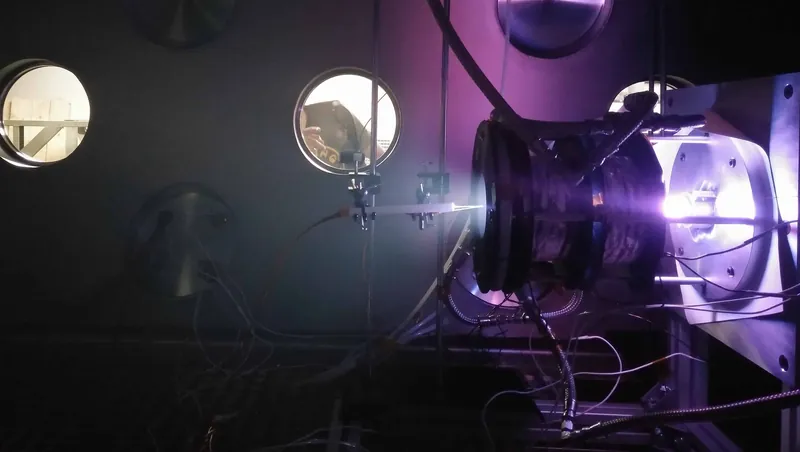
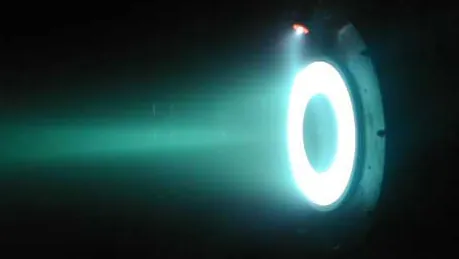
A helicon plasma thruster prototype firing inside the EP2 vacuum chamber

Electrodeless plasma thrusters

Helicon plasma thrusters (HPT) and electron-cyclotron-resonance thrusters (ECRT) ionize and heat the propellant with radio-frequency or microwave power, and accelerate it in a magnetic nozzle. With no electrodes in contact with the plasma, they promise long lifetimes and freedom in the choice of propellant. We model and simulate the full discharge and the plasma–wave interaction, and we design, build and test prototypes in our laboratory, from the HPT05 helicon thruster developed with SENER to waveguide and coaxial ECR thrusters and the magnetic arch concept. This is the core of the ERC projects ZARATHUSTRA and ROCINANTE, and of NEPTUNE and ALBATOR.
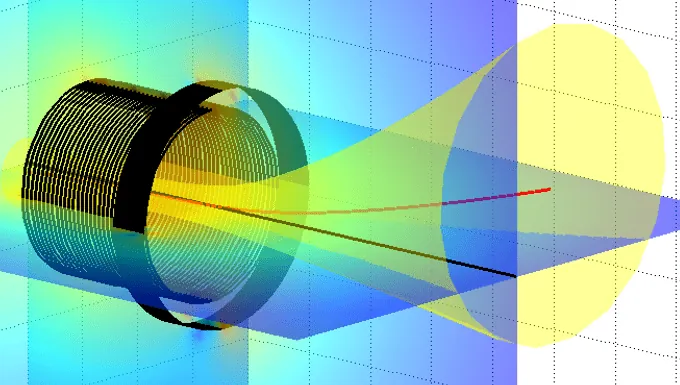
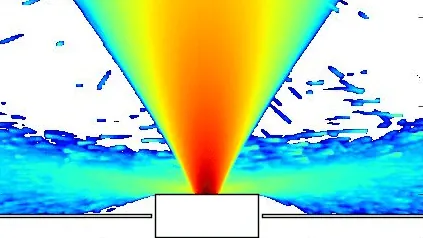
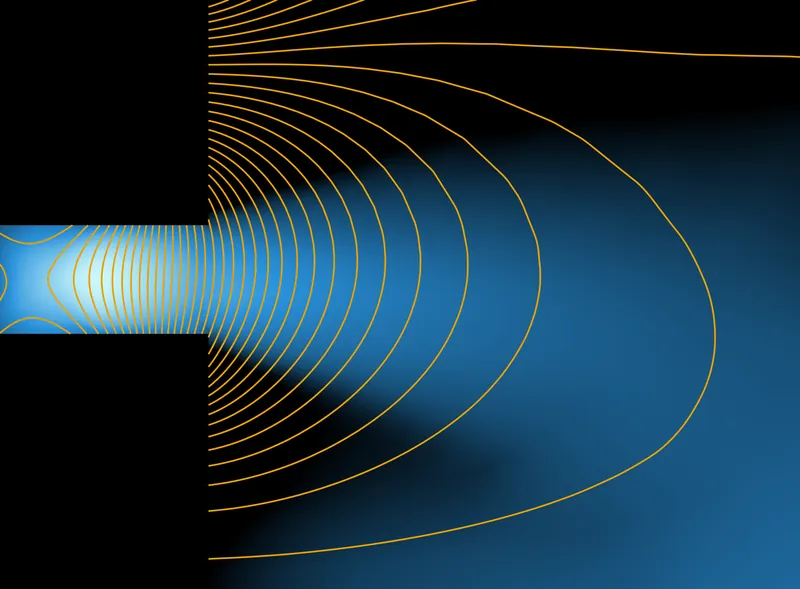
Simulated plasma expansion in a magnetic nozzle

Magnetic nozzles and magnetic arches

A magnetic nozzle is a convergent–divergent magnetic field that guides and accelerates a plasma jet supersonically, without contact with walls, and can be reshaped in flight, for instance to steer the thrust without moving parts (we hold a patent on a 3D magnetic nozzle for thrust vectoring). We study their fluid and kinetic physics: electron cooling, plasma detachment, collisional and facility effects, oscillations and instabilities. The magnetic arch, formed between two neighbouring sources, is a new configuration that we have proposed and investigated experimentally and numerically. Video lecture on magnetic nozzles.

A Hall effect thruster in operation

Hall effect thrusters

Hall effect thrusters (HET) are among the most mature electric thrusters. Their annular channel, with a mainly radial magnetic field, traps electrons in closed azimuthal drifts that ionize the propellant and sustain the axial electric field that accelerates the ions. The group has modelled them for more than two decades, with the hybrid code HYPHEN, advanced fluid and kinetic models, and particle-in-cell simulations of their instabilities and anomalous transport, in projects such as CHEOPS, ASPIRE and EDDA. We have also designed and tested a low-power cylindrical Hall thruster, and work on Hall propulsion for the ML-PLUS microsatellite mission.

Gridded and radio-frequency ion thrusters

We simulate the plasma discharge and wave coupling in radio-frequency ion thrusters, their ion optics, and the formation, neutralization and facility effects of ion-thruster plumes, with partners such as the Justus-Liebig-Universität Giessen.

Simulated plasma plume of a thruster with EP2PLUS

Plasma plumes, spacecraft interaction and facility effects

The plume of a plasma thruster expands into space, and its periphery can erode and contaminate spacecraft surfaces and alter their electric charge. In vacuum chambers, the facility itself changes how thrusters behave. Our codes EASYPLUME, EP2PLUS and AKILES2D model the plume expansion, its neutralization and electron thermodynamics, and its interaction with the spacecraft, other objects and the chamber walls (ESA ECOMODIS).

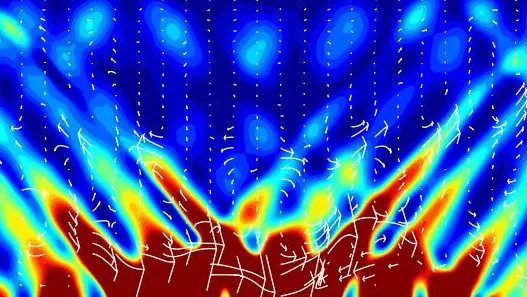
Plasma waves in an ECR thruster

Plasma turbulence, oscillations and anomalous transport

Oscillations and turbulence drive the anomalous electron transport that limits the performance and predictability of E×B devices. We study them with linear and kinetic stability theory, particle-in-cell simulations (including a new implicit PIC code), dedicated experiments, and data-driven techniques such as higher-order dynamic mode decomposition. The ERC Consolidator Grant ROCINANTE (2026–2031) is devoted to taming them in electrodeless thrusters. The group also organized the international E×B Plasmas Workshop.

Electrospray and air-breathing propulsion

We characterize ionic-liquid electrospray thrusters, their emission and lifetime, and the effect of the test facility on their measurements. For satellites in very low Earth orbit, we investigate air-breathing electric propulsion, which uses the residual atmosphere as propellant, from gas–surface interaction in the intake to the plasma discharge (SUPERLEO).

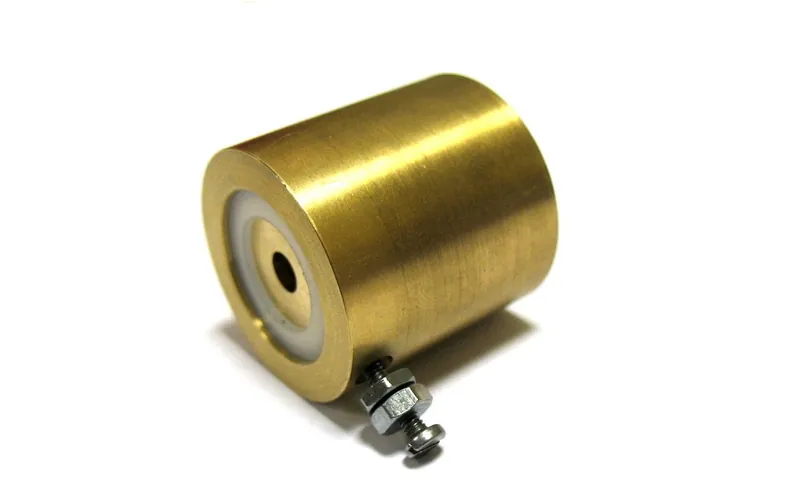
A Faraday cup plasma probe

Plasma diagnostics and testing

To characterize thrusters experimentally we develop and model Langmuir, emissive and Faraday probes, retarding-potential analyzers, E×B probes, laser-induced fluorescence and other optical techniques, diamagnetic loops and thrust balances, and we operate them in our laboratory.

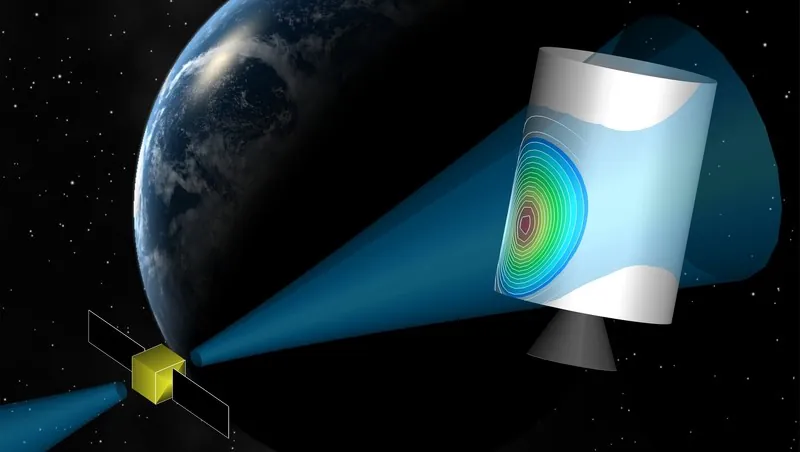
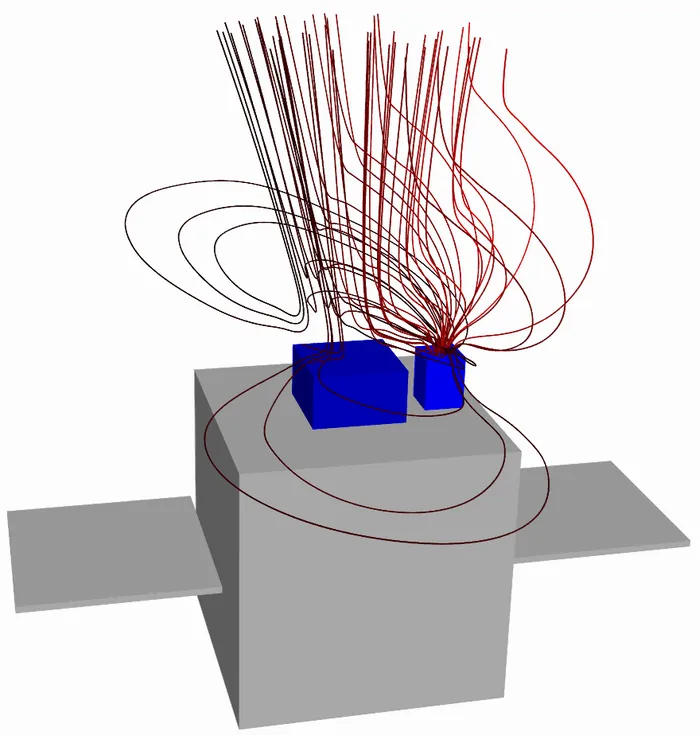
Artist's view of an ion beam shepherd spacecraft deorbiting debris

Active space debris removal

Low Earth orbit and the geostationary ring are crowded with dead satellites, fragments and rocket stages. The Ion Beam Shepherd, which we studied in the FP7 project LEOSWEEP, pushes a piece of debris contactlessly with a plasma beam to force its reentry. The Horizon Europe project ALBATOR (2025–2029) develops an ECR source of multicharged ion beams for this and other remediation strategies.

Numerical tools

Over the years, EP2 has developed a large suite of simulation codes, from fast fluid models to 3D hybrid and fully kinetic particle-in-cell simulators. See also the software and datasets we have released.

EP2PLUS simulation results

EP2PLUS

Extensible Parallel Plasma PLUme Simulator: a 3D hybrid PIC/fluid code that treats ions and neutrals as macroparticles and electrons as a fluid. Born in the LEOSWEEP project, it simulates the expansion and neutralization of plasma plumes and their interaction with the spacecraft, nearby objects and vacuum chambers.

HYPHEN simulation results

HYPHEN

HYbrid Plasma-thruster Holistic-simulation ENvironment: a 2D (r–z) hybrid PIC/fluid code for time-resolved simulations of magnetized plasma discharges. Initially applied to ion-thruster plumes, it is used to simulate Hall effect thrusters and, coupled with wave solvers, helicon and ECR thrusters.

DIMAGNO simulation results

DIMAGNO

A two-fluid code for DIvergent MAgnetic NOzzles that integrates the supersonic ion equations with the method of characteristics. Developed since 2009 by M. Merino and E. Ahedo, it has been used extensively to study the physics of magnetic nozzles (E. Ahedo and M. Merino, Physics of Plasmas 17, 073501, 2010).

Code record

AKILES2D simulation results

AKILES2D

Advanced Kinetic Iterative pLasma Expansion Solver: an open-source implementation of the kinetic electron model of paraxial, collisionless plasma plumes (M. Merino et al., Plasma Sources Sci. Technol. 27, 035013, 2018). It solves for the electric potential and the electron distribution function, and computes its moments. Developed by M. Merino and J. Mauriño with ESA funding.

Code record

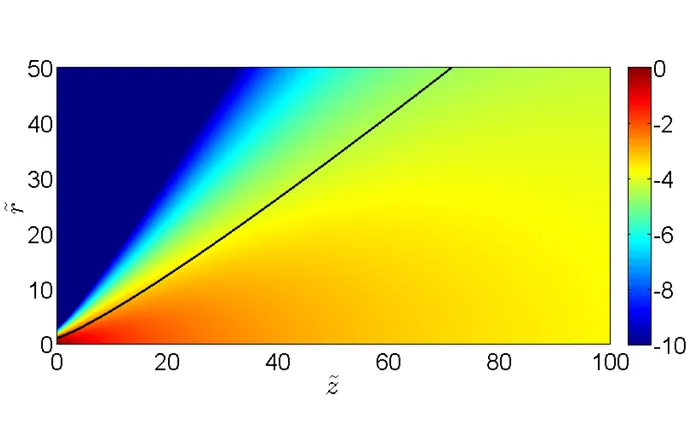
EASYPLUME simulation results

EASYPLUME

MATLAB codes for a quick assessment of a plasma plume expanding into vacuum, based on self-similar and asymptotic-expansion models; used, for instance, to optimize the propulsion subsystem of an ion beam shepherd.

PICASO and implicit PIC codes

Particle-in-cell codes for the kinetic simulation of E×B discharges and their instabilities, including GPU versions, and a new fully implicit, energy-conserving PIC code for electrodeless thrusters and magnetic nozzles under development in ADAPT and ROCINANTE.

Wave–plasma codes

Full-wave electromagnetic solvers for the propagation and absorption of helicon and microwave power in electrodeless thrusters and their plumes, coupled with the plasma transport codes.